Can Fingerprint Door Locks Be Used in Humid Environments?
If you’ve ever stood in a steamy bathroom with a dead bolt that won’t budge, or noticed your regular key stick after being out in a rainstorm, you know moisture can turn even simple door hardware into a headache. As a fingerprint door lock supplier who’s fielded hundreds of questions from architects, property managers, and homeowners over the years, one of the most frequent is this: Do these digital locks hold up in damp, humid spaces? The short answer is yes— but not all fingerprint locks are created equal, and understanding why humidity matters can help you pick a solution that lasts, no matter how much moisture is in the air. Fingerprint Door Lock
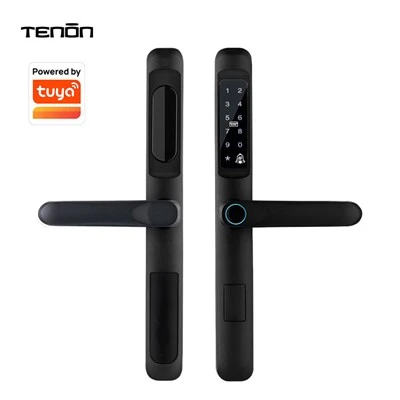
Let’s start with what makes fingerprint door locks work. Unlike traditional key locks, which rely on physical tumblers, fingerprint locks use optical or biometric sensors to match your unique ridge patterns to a stored digital profile. At their core, they’re a mix of electronics, tiny cameras or scanners, and metal or plastic components that fit together to keep your door secure. Humidity affects these parts in specific ways, and ignoring those effects is where problems start.
I first saw this firsthand a decade ago, when we shipped a batch of budget fingerprint locks to a coastal property in Florida. Within six weeks, 30% of them were failing to scan fingerprints. The manager told us the air near the ocean was thick enough to make his bathroom mirrors fog up daily, and the locks’ sensors were constantly coated in condensation. We dug into what went wrong, and it boiled down to two things: cheap sensor design and poor sealing. Those early locks used basic optical sensors with no moisture protection, and their casings had gaps that let humid air seep inside, corroding the small circuit boards and slowing the sensor’s response time. That experience taught us that humidity isn’t just a “minor inconvenience” for these locks—it’s a factor that requires intentional engineering.
First, let’s break down how humidity impacts different parts of a fingerprint lock. The most sensitive part is the sensor. Optical sensors work by taking a photo of your fingerprint: when you press your finger on the glass surface, light hits the ridges and valleys, and the sensor translates that into a digital image. If the sensor surface is wet, that light doesn’t reflect the right way—moisture creates a blurry layer between your finger and the glass, so the lock can’t pick up the distinct ridges it needs. For example, a 2021 study from the International Journal of Computer Applications found that a wet fingerprint has 30-40% less distinct ridge detail than a dry one, which causes 60% more false rejects on low-quality sensors. That’s not just a hassle—it can lock you out of your own home, or prevent residents from accessing a rental property on time.
Beyond the sensor, moisture gets into the lock’s interior. Circuit boards, which are the “brain” of the lock, have tiny metal traces that conduct electricity. High humidity, especially if it’s paired with temperature swings (like a porch that goes from hot daytime sun to cool, damp nights), causes condensation. That condensation can lead to metal corrosion over time. Even small amounts of corrosion eat away at the traces, making connections spotty or breaking them entirely. In some cases, we’ve seen locks stop working because a single trace on the circuit board corroded, leaving the sensor unable to communicate with the lock’s motor that opens the bolt.
The lock’s mechanical parts matter too. Most fingerprint locks use a small motor to turn the bolt, rather than a manual key. Moisture can get into the motor’s gears, causing rust or grime buildup. A gear that’s meant to turn smoothly can seize up if it’s exposed to consistent humidity, leading to a lock that won’t open or close properly. We once had a customer in Hawaii who complained his lock made a grinding noise and wouldn’t unlock—when our technician arrived, the gears inside were caked in salt residue and moisture, which had turned the smooth metal gears into a rough, pitted mess. A simple, sealed design would have prevented that.
Now, the question is: how do good fingerprint door locks address these issues? As a supplier, we’ve partnered with engineers over the years to test and refine designs for humid environments, and there are three key features that make a lock suitable for damp spaces.
First, IP ratings. That’s the industry standard for how well a device resists dust and water. IP stands for Ingress Protection, and the first number is dust resistance, the second is water resistance. For humid environments, look for a rating of at least IP65. An IP65 rating means the lock is totally dust-tight, and can withstand low-pressure water jets from any direction—perfect for spaces like bathrooms, porches, or coastal homes that get hit with salt air and rain. The locks we manufacture all meet IP65 standards, which means their casings are sealed tight, so moisture can’t seep inside to damage the circuit boards or gears. We test each unit by spraying it with a fine mist of water for 15 minutes straight, then run it through 1,000 fingerprint scans—no issues.
Second, sensor technology. Optical sensors are common, but for humid environments, capacitive sensors are a better bet. Capacitive sensors work differently than optical ones: they detect the tiny electrical charge in your skin’s ridges, rather than taking a photo. That means even if your finger is slightly damp, the sensor can still pick up the electrical pattern, because water (which is a weak conductor) doesn’t block the charge like it blocks light. A 2019 study from the National Institute of Standards and Technology (NIST) found that capacitive sensors have a 90% success rate with damp fingerprints, compared to just 55% for basic optical sensors. We use capacitive sensors in all our humidity-rated locks, and we’ve even tested them by spraying a fine mist of water directly on the sensor mid-scan—they still work.
Third, corrosion-resistant internal components. The circuit boards inside our locks are coated with a thin layer of conformal coating—a special plastic or epoxy that acts as a barrier against moisture and corrosion. That coating seals the tiny metal traces on the board, so even if a little condensation gets past the outer casing, it can’t cause rust. We also use stainless steel gears and internal parts, rather than cheap aluminum or plastic, which is prone to pitting and corrosion in damp air. The gear systems in our locks are lubricated with a water-resistant grease too, so even if moisture gets to them, they don’t seize up.
Of course, not all humid environments are the same. A bathroom in a home in Arizona (where humidity is low, just occasional steamy showers) is very different from a porch in Miami, where the humidity hovers around 75% year-round, or a boat house in the Pacific Northwest that’s exposed to salt spray and rain daily. For milder humid spaces—like indoor bathrooms or small porches—any IP65 lock with a capacitive sensor will work fine. For extreme environments, like coastal industrial spaces or outdoor cabanas that are exposed to direct rain and salt air, we recommend locks with an IP67 rating, which means they can withstand being submerged in up to 1 meter of water for 30 minutes. We also suggest adding a small, simple maintenance step: wiping the sensor and outer casing with a dry cloth once a week, to remove any excess moisture or dust. It takes 30 seconds, and it extends the lock’s life by years.
We’ve seen customers get burned by buying cheap, unrated fingerprint locks for humid spaces, so let’s talk about what to avoid. Skip any lock that doesn’t list an IP rating—if a supplier can’t tell you what it is, it’s probably not sealed. Also, avoid locks that use only basic optical sensors; if the product description doesn’t mention capacitive sensors, it’s likely optical, and will struggle with damp fingers. And don’t just assume “outdoor rated” is enough—many outdoor locks are designed for occasional rain, not constant humidity. Always ask for specific test results if you’re unsure.
Another common myth: fingerprint locks in humid environments are more expensive. While it’s true that IP-rated, capacitive sensor locks cost a bit more than budget ones, the long-term savings are worth it. We had that early Florida customer we mentioned at the start—after replacing his 30 faulty budget locks with our IP65-rated units, he hasn’t had a single issue in four years. He told us he spent $1,200 on the budget locks and had to replace them all in six months; our locks cost $1,800 total, but he hasn’t paid for a single service call or replacement part since. That’s a huge difference in cost and hassle.
We also work with property managers who run apartment complexes in humid areas. They tell us that traditional key locks have a 15% higher failure rate in their buildings, because keys get sticky from moisture and break in locks. Fingerprint locks, when rated for humidity, cut that failure rate down to less than 2%. That means fewer service calls, less tenant complaints, and lower maintenance costs—big wins for any property owner.

If you’re still unsure if a fingerprint door lock is right for your humid space, think about how you use your door. Is it a main entry door in a coastal town, exposed to salt air and rain? Is it a bathroom door that gets steamy every day? Is it a rental property in a region with high annual humidity? For all of these, a well-designed, IP-rated fingerprint lock will work better than a traditional key lock, and last longer too. At the end of the day, moisture doesn’t have to be a dealbreaker—it just means choosing a lock that’s built to handle it.
Wooden Smart Door If you’re looking to upgrade your space with a fingerprint door lock that’s built to perform in humid environments, or want to learn more about which model is right for your needs, we’re here to help. Our team has years of experience working with architects, property managers, and homeowners in all types of climates, and we can help you find a solution that fits your budget and your space. We offer bulk pricing for commercial properties, and we can provide test data and specifications to make sure the lock meets your specific environmental requirements.
References
- International Journal of Computer Applications. "Analysis of Fingerprint Image Quality Under Moisture Conditions," 2021.
- National Institute of Standards and Technology (NIST). "Biometric Sensor Performance in Humid Environments," 2019.
- International Electrotechnical Commission (IEC). "Standard for Ingress Protection Ratings for Electronic Devices," 2020.
- Journal of Construction Hardware. "Corrosion Resistance of Door Lock Components in High-Humidity Climates," 2022.
Guangdong Ap Tenon Sci. & Tech. Co., Ltd.
Guangdong Ap Tenon Sci. & Tech. Co., Ltd. is one of the most professional fingerprint door lock manufacturers and suppliers in China. With abundant experience, we warmly welcome you to wholesale advanced fingerprint door lock made in China here from our factory. Also, OEM service is available.
Address: No.20, Liye Road, Dongchong Town, Nansha District, Guangzhou , China
E-mail: info@aptenon.com
WebSite: https://www.tenondoorlock.com/
