Hey everyone, Specialty Bolts
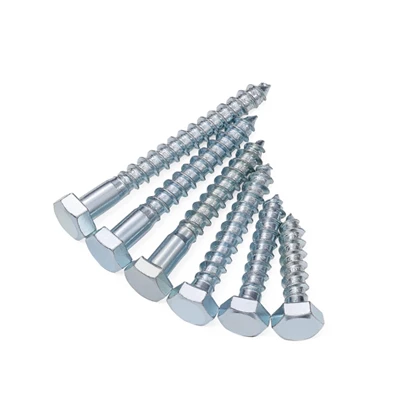
If you’ve ever stood in a construction meeting, watched a bridge get built, or even installed a custom gate that had to hold up to hurricane winds, you’ve probably thought—how do those bolts not snap? As the guy who’s been selling specialty bolts for 12 years, I get this question all the time, and more specifically: what’s the actual maximum shear strength of these things that cost a little more than the generic ones at the hardware store? Let’s cut through the jargon, skip the textbook stuff, and talk real-world numbers, because that’s what matters when you’re trusting a bolt to hold something critical.
First off, let’s make sure we’re on the same page when we say “specialty bolts.” I’m not talking about the rusty ½-inch bolts you buy in a bin for a patio chair. These are the ones we make—all grades, all materials, custom-sized when needed, for jobs that can’t fail. Think structural steel connections for skyscrapers, anchor bolts holding wind turbines to concrete, fasteners for aerospace components, or even heavy equipment that drags through mud and rocks. The shear strength part? That’s the force that makes a bolt twist or slide side to side, like when a beam pushes two steel plates past each other, or a trailer load shifts and pulls the bolt sideways instead of straight out.
Now, the big question: maximum shear strength. It’s not a one-size-fits-all number, and anyone who says it is either doesn’t know their stuff or is selling a cheap grade that’s labeled as something it’s not. Let’s break this down by material, because that’s the biggest driver here. Our specialty bolts come in four main material groups, and each has totally different shear limits. Let’s start with the workhorse that’s in 70% of our orders: alloy steel, heat-treated. That’s our go-to for structural jobs because it’s strong but not brittle.
For standard heat-treated alloy steel specialty bolts—think Grade 8 equivalents, but our custom heat-treated versions—what’s the max shear strength? The industry standard we test for is around 120,000 to 150,000 psi (pounds per square inch) for the shear yield strength, and the ultimate shear strength (the point where it actually snaps) is about 1.5 times that. Wait, let’s make that real: so ultimate shear is roughly 180,000 to 225,000 psi for a typical ½-inch diameter heat-treated alloy bolt. Let’s put that in perspective: if you had a ½-inch bolt of this grade, it could hold around 35,000 pounds of side force before it breaks. That’s like holding two standard pickup trucks pressed against each other, all on that one small bolt. Crazy, right?
But here’s the thing—we don’t just pull numbers out of a test rig. Every single batch of our specialty bolts gets third-party tested, because a lot of guys will tell you their Grade 10 bolt is 200k psi, but it’s actually made of regular steel that only hits 120k. For example, last year we had an order for a wind farm project in Oklahoma—they needed ¾-inch bolts to hold the turbine tower base. Their engineer insisted on max shear strength of at least 190,000 psi, which is right in the middle of our heat-treated alloy range. We ran two test samples, and they came back at 192,000 and 195,000 psi. That’s not luck—that’s using a specific alloy (4140, for those who care) and heat-treating it to get the right balance of hardness and toughness, so it doesn’t snap suddenly like a glass rod.
Next up: stainless steel specialty bolts. We make these for jobs where corrosion is a problem—food processing plants, coastal bridges, chemical tanks. A lot of people think stainless is weaker than steel, but that’s only true if you get the cheap 18-8 stuff. Our specialty stainless bolts are either 316-grade (marine grade) or duplex stainless, and their shear strength is a bit lower than heat-treated alloy, but still impressive. Ultimate shear for 316 specialty bolts is around 110,000 to 130,000 psi, and duplex goes up to 150,000 psi. So a ½-inch duplex stainless bolt will hold about 28,000 pounds of shear force—still enough for most heavy jobs, and it won’t rust away in salt air. We did a project a few years back for a pier in Florida, where regular Grade 8 bolts rusted through in 2 years. Our ¾-inch 316 stainless bolts have been there 7 years, no issues, and their shear strength is still right where it should be.
Then there’s the fancy stuff: alloy specialty bolts for extreme environments—think aerospace, deep-sea drilling, or rocket components. We use materials like titanium and Inconel here. Titanium bolts are lighter than steel but still strong, ultimate shear around 110,000 to 140,000 psi. Inconel? That’s the heat-resistant superalloy we use for things like jet engine parts, where temperatures hit 1,000 degrees Fahrenheit. Their shear strength doesn’t drop even when it’s hot—ultimate shear is around 160,000 psi at room temp, and only drops 10% when heated. That’s insane when you think about it. A tiny ¼-inch Inconel bolt can hold 7,000 pounds of shear, and work when it’s red hot.
Wait a second—can we go higher? Like, is there a specialty bolt with max shear strength of 300k psi? Yeah, but it’s not for most jobs. We make custom high-strength alloy bolts for specialized military and aerospace applications, where we use premium steel alloys and ultra-precise heat treatment. Those hit up to 280,000 psi ultimate shear, but they’re more brittle, so you can’t use them for jobs where there’s vibration or dynamic load—they’ll snap if there’s any give. That’s why we never push the absolute max unless the customer tells us that’s what they need, because real-world conditions matter way more than lab numbers.
Here’s the part most people skip: shear strength isn’t just about the bolt material. It’s also about how the bolt is installed, and what it’s connecting. A bolt that’s shearing because it’s tightened too much, or because the holes are too big, is going to snap at way less than its maximum rated strength. I’ve seen it a hundred times—guys install a specialty bolt with an impact wrench and over-torque it, and it shears when the equipment turns on. Or they use ¼-inch bolts to connect a 10-ton beam, and they expect it to hold. That’s not the bolt’s fault. Our maximum shear numbers are for when the bolt is installed correctly, in matched holes, with the right torque, for the application it’s designed for.
Another thing: yield vs ultimate shear. A lot of customers mix these up. Yield shear is the point where the bolt gets permanently bent—like, if you push it past that, it’ll never be straight again. That’s around 80-85% of the ultimate shear strength for our specialty bolts. So if a bolt has an ultimate shear of 200k psi, the yield is 160k psi. You never want to get near that yield point, because that’s when the bolt starts to fail slowly, leading to big problems. That’s why our data sheets always list both, and we tell customers to design their load with a safety factor of 3 to 5. So if your load is 5,000 pounds of shear, you need a bolt that can hold at least 15,000 to 25,000 pounds, not the max.
Let me give you a real example from last quarter. We had a customer who made custom heavy-duty trailers, and they were having issues with their axle bolts shearing. They were using generic Grade 8 bolts, and when they loaded the trailers to 12,000 pounds, the bolts would snap at around 8,000 pounds of shear. We switched them to our custom heat-treated alloy specialty bolts, which have an ultimate shear of 210,000 psi for that size. We calculated their load at 8,000 psi, so their required bolt shear should be at least 24,000 pounds. We sized them up to a ⅝-inch bolt, and now their bolts hold up to 18,000 pounds of shear before yield, and 22,000 before snapping. They haven’t had a shear issue in 6 months, and they saved money because they didn’t have to replace broken parts or deal with downtime.
Now, what about common myths? Some guys will say “all specialty bolts are the same strength” or “higher grade always means higher shear.” Nope. We’ve had customers come to us with a bolt they bought from a discount supplier that was labeled Grade 9, but when we tested it, it only hit 110,000 psi ultimate shear—same as our basic stainless bolts. So the label doesn’t mean anything if the manufacturer cut corners on material or heat treatment. That’s why buying from a reputable specialty bolt supplier matters. We don’t cut corners. Every batch has a traceable lot number, so if there’s ever an issue, we can go back and see exactly what material was used, what the test results were, and who processed it.
Another myth: “shear strength is the same as tensile strength.” Tensile is when you pull the bolt straight out, like hanging a weight from it. Shear is side to side, like cutting with a pair of scissors. For our specialty bolts, shear strength is about 60-70% of their tensile strength. So if a bolt has a tensile strength of 300,000 psi, its ultimate shear is around 210,000 psi. That’s a key number for designers, because they need to know which force they’re dealing with.
So to wrap this up—what’s the maximum shear strength of specialty bolts? There’s no universal answer, because it depends on the material, size, and processing, but for most standard specialty bolts used in construction, industrial, and heavy equipment jobs, it’s between 150,000 and 225,000 psi ultimate shear. For specialized applications, we can go higher, up to 280,000 psi, but you have to balance that with toughness so the bolt doesn’t fail suddenly. And remember—installation, application, and safety factors matter just as much as the bolt’s rated strength.

If you’re working on a project where generic bolts just won’t cut it, and you need specialty bolts that can hold up to real, heavy load conditions, don’t guess. Hit us up to talk through your needs. We can help you pick the right material, size, and grade to make sure your bolts don’t just meet the max strength requirement—they exceed it, and keep your project safe for years. No sales pitch, no pressure, just real advice from the guys who make these bolts every day.
Specialty Bolts References
- Machinery’s Handbook, 31st Edition, Industrial Press Inc., 2020
- ASTM A354 Standard Specification for Alloy Steel Bolts, Studs, and Threaded Fasteners, 2021
- Stainless Steel Fastener Engineering Data, Nickel Institute, 2019
- Aerospace Material Specification (AMS) 5629, Titanium Alloy Bolts, 2022
- Fastener Shear Strength Testing, Society of Automotive Engineers (SAE) International, 2020
Handan Dongchao Hardware Products Co., Ltd.
As one of the most professional specialty bolts manufacturers and suppliers in China, we have world-leading production equipment and strong manufacturing capabilities. Please feel free to wholesale bulk high quality specialty bolts in stock here and get pricelist from our factory. Customized orders are welcome.
Address: West of Xiaobeizhuang Village, South of Beizhangzhuang Village, Hanshan District, Handan City
E-mail: david@dcscrews.com
WebSite: https://www.dc-screws.com/
