In the ever – advancing field of aerospace, the search for innovative materials and components is a constant pursuit. As a supplier of ring magnets, I’ve often been asked about the potential use of these specialized magnets in aerospace applications. Today, I’m excited to delve into this topic and explore the possibilities, limitations, and future prospects of ring magnets in the aerospace industry. Ring Magnets

The Basics of Ring Magnets
Before we discuss their aerospace applications, let’s briefly understand what ring magnets are. Ring magnets are circular magnets with a hole in the center. They can be made from various magnetic materials, such as neodymium, samarium – cobalt, ferrite, and alnico. Each material has its own unique magnetic properties, including magnetic strength, coercivity (resistance to demagnetization), and Curie temperature (the temperature at which a magnet loses its magnetic properties).
Neodymium ring magnets, for example, are known for their incredibly high magnetic strength. They are the strongest permanent magnets commercially available, making them suitable for applications where a strong magnetic field is required in a relatively small space. Samarium – cobalt ring magnets, on the other hand, have excellent temperature stability and corrosion resistance, which makes them ideal for use in harsh environments.
Advantages of Ring Magnets in Aerospace
1. Miniaturization and Weight Reduction
One of the most significant advantages of ring magnets in aerospace applications is their ability to facilitate miniaturization and weight reduction. In the aerospace industry, every gram counts. By using ring magnets, engineers can design smaller and lighter components without sacrificing performance. For instance, in electric motors used in aerospace systems, ring magnets can be used to create compact and efficient motor designs. A smaller motor means less weight, which translates to lower fuel consumption and increased payload capacity for aircraft and spacecraft.
2. Precision and Control
Ring magnets offer precise magnetic fields, which are crucial for many aerospace systems. In navigation and attitude control systems, for example, precise magnetic fields are used to ensure accurate orientation and movement. Ring magnets can be magnetized to have specific magnetic field patterns, allowing for highly precise control of magnetic forces. This precision is essential for maintaining the stability and accuracy of aerospace vehicles during flight.
3. Reliability
Aerospace applications require components that are highly reliable. Ring magnets made from materials like samarium – cobalt and neodymium have excellent long – term stability. They are resistant to demagnetization, corrosion, and mechanical stress, which means they can operate effectively in the harsh conditions of space and flight. For example, in satellite systems, ring magnets can be used in actuators and sensors, where reliability is of utmost importance for the success of the mission.
Potential Aerospace Applications
1. Electric Motors and Generators
Electric motors and generators are fundamental components in aerospace systems. In aircraft, electric motors are used in various applications, such as flight control surfaces, landing gear systems, and HVAC (heating, ventilation, and air – conditioning) systems. Ring magnets can be used in the stator or rotor of these motors to generate a magnetic field, which in turn drives the rotation of the motor. The high magnetic strength of neodymium ring magnets allows for the design of more efficient and powerful motors.
In spacecraft, electric motors are used for propulsion systems, attitude control, and power generation. Ring magnets can play a crucial role in improving the performance of these systems by increasing the efficiency of power conversion and reducing the overall weight of the components.
2. Sensors and Actuators
Sensors and actuators are used in aerospace systems to measure various parameters and control the movement of components. For example, magnetic sensors can be used to measure the position, speed, and direction of moving parts. Ring magnets can be incorporated into these sensors to generate a magnetic field that interacts with the sensing element, allowing for accurate measurements.
Actuators, on the other hand, are used to convert electrical energy into mechanical motion. Ring magnets can be used in the design of electromagnetic actuators to provide a strong and controllable magnetic field. This enables precise control of the actuator’s movement, which is essential for applications such as flight control and payload deployment.
3. Navigation and Attitude Control
Navigation and attitude control are critical functions for aerospace vehicles. Inertial navigation systems (INS) and magnetometers are used to determine the position and orientation of the vehicle. Ring magnets can be used in these systems to create stable and consistent magnetic fields. For example, in a magnetometer, a ring magnet can be used to generate a reference magnetic field, which is used to measure the Earth’s magnetic field and determine the vehicle’s orientation.
In attitude control systems, ring magnets can be used in magnetic torquers. Magnetic torquers are devices that use the Earth’s magnetic field to generate a torque, which can be used to adjust the orientation of the spacecraft. The precise control of the magnetic field provided by ring magnets allows for accurate and efficient attitude control.
Challenges and Limitations
1. Temperature and Radiation
The aerospace environment is characterized by extreme temperatures and high levels of radiation. These factors can have a significant impact on the performance of ring magnets. For example, high temperatures can cause the magnet to lose its magnetic properties, especially if the temperature exceeds the Curie temperature of the magnetic material. Radiation can also damage the crystal structure of the magnet, leading to a reduction in its magnetic strength.
To overcome these challenges, special materials and shielding techniques need to be developed. For instance, using magnetic materials with a high Curie temperature or applying radiation – resistant coatings to the magnets can help improve their performance in the aerospace environment.
2. Cost
The production of high – quality ring magnets, especially those made from rare – earth materials like neodymium and samarium – cobalt, can be expensive. The cost of the raw materials, as well as the complex manufacturing processes involved, contribute to the high price of these magnets. In the aerospace industry, where cost – effectiveness is also a major consideration, the high cost of ring magnets can be a limiting factor.
However, as technology advances and production methods become more efficient, the cost of ring magnets is expected to decrease. This will make them more accessible for aerospace applications in the future.
Future Prospects
The future of ring magnets in aerospace applications looks promising. With the continuous development of new magnetic materials and manufacturing technologies, the performance of ring magnets is likely to improve significantly. For example, researchers are exploring the use of nanocomposite magnetic materials, which have the potential to offer even higher magnetic strength and better temperature stability.
In addition, the increasing demand for more efficient and reliable aerospace systems will drive the adoption of ring magnets. As the aerospace industry moves towards more electric and hybrid – electric aircraft and spacecraft, the need for high – performance electric motors and generators will grow. Ring magnets, with their ability to provide strong and precise magnetic fields, will play a crucial role in meeting these requirements.
Conclusion
In conclusion, ring magnets have great potential for use in aerospace applications. Their advantages in terms of miniaturization, precision, and reliability make them suitable for a wide range of aerospace systems, including electric motors, sensors, actuators, and navigation systems. However, challenges such as temperature, radiation, and cost need to be addressed to fully realize their potential.
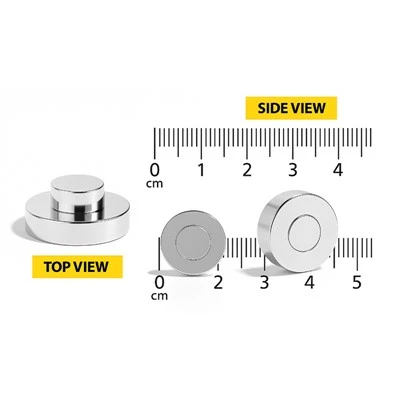
As a supplier of ring magnets, I am committed to working with aerospace engineers and researchers to develop innovative solutions that overcome these challenges. We offer a wide range of ring magnets made from different materials, with various magnetic properties and sizes, to meet the specific needs of aerospace applications.
U-shaped Magnets If you are involved in the aerospace industry and are interested in exploring the use of ring magnets in your projects, I encourage you to contact us for a detailed discussion. We can provide you with technical support, samples, and competitive pricing. Let’s work together to push the boundaries of aerospace technology with the help of high – performance ring magnets.
References
- Cullity, B. D., & Graham, C. D. (2008). Introduction to Magnetic Materials. Wiley – Interscience.
- Handbook of Magnetic Materials. Elsevier. (Various volumes).
- IEEE Transactions on Magnetics. A peer – reviewed journal that publishes research on magnetic materials and their applications.
Dongguan Jinconn New Material Holdings Co., Ltd.
We’re well-known as one of the leading ring magnets manufacturers in China, featured by quality products and low price. Please rest assured to buy bulk advanced ring magnets in stock here from our factory. We also accept customized orders.
Address: Xiaohe Industry Zone, Daojiao Town, Dongguan City,Guangdong Province,China
E-mail: lena@jinconn.com
WebSite: https://www.jinconnmagnet.com/
