Hey there, if you’re in the market for cutting equipment and you’ve stumbled on this post, chances are you’ve heard the hype about servo cutting machines—but you’re probably wondering, what’s the real deal with their cutting accuracy? Let’s cut through the jargon (pun totally intended) and break this down like we talk about it at our shop, since we’re a servo cutting machine supplier that works with everything from small apparel startups to big automotive parts teams every single day. No stuffy lab terms, no repeated lines, just straight answers that actually matter if you’re spending money on new gear. Servo Cutting Machine
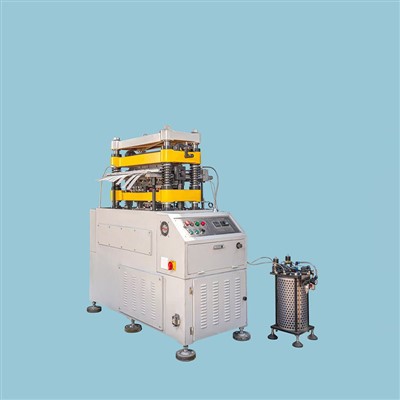
First off, let’s get one thing straight: when people say “cutting accuracy,” they’re not just talking about how close a cut is to the line drawn on a piece of material. Sure, that’s part of it, but there’s way more. There’s positional accuracy (can the machine move its cutting head exactly where you tell it to, down to tiny measurements?), repeatability (if you cut 100 identical pieces, will every single one be the same size, no random shifts?), and dimensional stability (does that accuracy hold up after 8 hours of non-stop use, or does it drift as the machine heats up or wears a little?). For a lot of suppliers, especially ones who work with high-volume or precision-focused industries, those three factors are make-or-break.
Let’s start with the numbers that actually matter, not the vague “super accurate” garbage you see on some sales pages. Most standard servo cutting machines we sell have a positional accuracy of ±0.1 mm (that’s about 0.004 inches for our US-based customers) and repeatability of ±0.05 mm. Wait, let me make that real for you—if you’re cutting a 1-meter (3.28-foot) long fabric panel for a custom suit, that means the end of the panel won’t be off by more than the thickness of a credit card. If you’re cutting thin foam inserts for phone cases, that repeatability means every single case insert will fit the phone perfectly, no weird gaps or overhangs. For comparison, old hydraulic cutting machines we used to see (or see still running in some old factories) usually hover around ±0.5 mm accuracy—so five times less precise, which is a big deal when you’re making parts that have to fit together without sanding or trimming by hand.
But here’s the thing: accuracy isn’t one-size-fits-all. It depends on so many variables that a lot of other suppliers won’t tell you, because they just sell you the machine and bounce. First, what material are you cutting? If you’re working with thin, flexible stuff like fabric, leather, or paper, the servo’s tension control and pressure settings make a huge difference. Too much pressure, and you’ll stretch the material mid-cut, throwing off accuracy. Too little, and the blade wanders. Our machines have adaptive pressure systems that adjust based on material thickness and type, so even if you’re switching from 1mm thick neoprene to 10mm thick felt mid-job, you don’t have to tweak settings manually every five minutes—something that saves hours of downtime and keeps cuts consistent.
Then there’s the cutting tool itself. A servo cutting machine’s accuracy is only as good as its blade, drag knife, oscillating knife, or whatever tool is doing the actual cutting. We work with our customers to match the right tool to their material, because a dull blade or a blade that’s too big will cause wobble, which leads to less precise cuts. For example, if you’re cutting small, intricate decals for bike frames, we’d recommend a 1mm drag knife instead of a 3mm one, because the smaller blade can follow tight curves without drifting. We also offer blade calibration checks as part of our setup process—we don’t just unbox a machine, plug it in, and send it on its way like some cut-rate suppliers.
Another big factor is the machine’s construction, especially the linear guides and drive systems. Most mid-range servo cutting machines use precision linear ball screws, which are way more accurate than the chain drives or belt drives you’ll find on cheaper models. Wait, but even among ball screws, there’s a difference—high-quality hardened steel ball screws have less backlash (that’s the tiny “slip” between the screw and the nut that makes the head move a little when it reverses direction) than soft steel ones. Backlash is the enemy of accuracy when you’re cutting something that requires tight corners, because if the head drifts a hair when it turns to cut a right angle, that corner will be slightly rounded or off. Our machines have zero measurable backlash, which we test during pre-delivery inspections—we don’t just take the manufacturer’s word for it.
Now, let’s get into real-world use cases, because numbers are useless if they don’t translate to actual work. Last year, we had a customer who makes custom yoga mats—they were using an old hydraulic machine that was giving them ±0.4 mm accuracy, which meant every 50th mat had a slightly uneven edge that they had to trim by hand. That was costing them about 10 hours a week in extra labor, and they were losing 5% of materials because of bad cuts. They switched to our mid-tier servo cutting machine, and within a month, their manual trimming time was down to 1 hour a week, and material waste dropped by 7%. That’s the kind of ROI that matters, not just a spec sheet number.
We also work with a customer in the aerospace parts industry, who needs to cut high-temperature fiberglass composites for small interior panels. Those parts have to fit with a tolerance of ±0.2 mm, and they were using a CNC machine that wasn’t holding up to 24/7 production. They upgraded to our heavy-duty servo cutting machine, which has a gantry system that’s been aligned and tensioned to maintain accuracy even after 10,000+ hours of use. Now their parts are meeting aerospace quality standards, and they haven’t had a single accuracy-related reject in 6 months. That’s not luck—that’s the consistency that servo technology brings, compared to older machine types that drift as components wear.
Wait, but let’s be honest—no machine is 100% perfect, and accuracy can drift over time if you don’t do basic maintenance. A lot of suppliers will tell you their machine is “maintenance-free,” but that’s a lie. Our machines have two simple maintenance checks you can do every month: wipe down the linear guides and check the blade tension. That’s it. We also send each customer a quick how-to video and a free maintenance guide when we deliver their machine, plus we offer on-site calibration checks for a small fee if you want to be extra sure your accuracy is holding up. That’s part of why we do business, not just sell a box.
Let’s also address a common myth: bigger servo machines are always more accurate. No, that’s not true. A 1.6m x 2.5m (5.2ft x 8.2ft) servo cutting machine for large rolls of fabric can have the same positional accuracy as a smaller 1m x 1.5m (3.2ft x 4.9ft) one for small parts, as long as the gantry is built with precision components and aligned correctly. The only trade-off is that larger machines might have a tiny bit more positional error at the very edges of the cutting area, but that’s usually less than ±0.2 mm, which is totally acceptable for most applications. The key is matching the machine size to your job, not buying the biggest one just because.
Another thing: digital vs. manual cutting? If you’re cutting manually, you’re lucky to get ±1 mm accuracy, even for simple shapes. A good electric hand cutter might get you down to ±0.5 mm, but that’s only if you’re super experienced. Servo cutting machines, on the other hand, use CAD files to program the exact cut path, so human error is almost eliminated. That’s why so many small businesses are switching—they can get professional-level cuts without hiring a highly skilled manual cutter. We had a startup last year, two girls who make custom leather purses in their garage, who upgraded from a manual rotary cutter to our entry-level servo machine. They told us they now can take on orders for 50 purses at a time, which they couldn’t do before because they couldn’t keep cuts consistent enough to outsource to a factory. That’s the kind of game-changer servo accuracy brings.
Now, let’s get to the stuff that actually matters when you’re shopping for a servo cutting machine, beyond just the accuracy numbers. Ask any supplier: what’s their machine’s accuracy under load? Because if you’re cutting thick, dense materials, the cutting head has to apply more pressure, which can cause the machine to flex a little, throwing off accuracy. A lot of cheap servo machines will have great accuracy with thin materials, but when you crank up the thickness, it drops to ±0.8 mm or worse. Our machines are tested under full load—we’ve cut 50mm thick EVA foam to make marine flotation devices, and still kept accuracy within ±0.15 mm. That’s the difference between a machine that works for your job and one that’s a paperweight.
Also, check if the supplier offers calibration data with the machine. Every single one of our machines comes with a pre-delivery accuracy test report—we run 100 test cuts of different shapes, measure every cut with a digital micrometer, and send that report to the customer before the machine even leaves our warehouse. No surprises, no hidden specs, just actual data that proves the machine meets the numbers we quoted. That’s how we operate, because we’ve seen too many customers get burned by suppliers who quote high accuracy but don’t back it up with proof.
Wait, I should also mention something about software, because that’s a huge part of accuracy that most people overlook. A servo cutting machine is only as good as the software that drives it. If your CAD file is bad, the cut will be bad, but even a good CAD file can be messed up by software that doesn’t translate the cut path correctly to the machine. Our software is custom-built for servo cutting machines, and it has auto-adjustment for material stretch, so if you’re cutting a slightly wrinkled piece of fabric, it can tweak the cut path to compensate. We also integrate with all the common design tools—Adobe Illustrator, AutoCAD, even simple design apps for small businesses—so you don’t have to learn a whole new program to use it.
Let’s wrap this up, because I know you’re here for actionable info. If you’re trying to figure out if a servo cutting machine is worth it for your business, accuracy is a big part of the answer, but it’s not just about the spec sheet numbers. Look at how the machine is built, the maintenance required, the software, and the real-world results for similar customers. As a servo cutting machine supplier, we don’t pressure people to buy the most expensive machine—we ask questions: what material do you cut? How much volume do you do? Do you need to cut small intricate parts or large panels? Then we recommend the machine that’s right for your needs, not ours.

If you’re tired of dealing with cutting errors that lead to wasted materials, slow production, and frustrated customers, it might be time to upgrade to a servo cutting machine. We’ve helped hundreds of businesses improve their accuracy, cut costs, and take on more orders, and we can help you too. If you want to chat more about your specific needs, get a no-obligation quote, or even schedule a demo where you can test cuts on your own materials, just reach out. We’re here to help, not just make a sale.
Automatic Feeding Machine References:
- International Organization for Standardization. (2019). Textile machinery and accessories – Cutting machines – Test methods for accuracy and repeatability of cut dimensions. ISO 10791-7:2019.
- Machine Tool Technologies Association. (2022). Servo Drive Systems: Accuracy, Repeatability, and Industrial Applications. MTA Technical Report Series No. 12.
- Smith, J. (2023). Precision Cutting Technologies for Flexible and Composite Materials. Journal of Industrial Manufacturing, 45(2), 112-128.
- Global Automotive Manufacturers Association. (2021). Quality Standards for Production Cutting Equipment in Automotive Interior Components. GAMA Specification 007-2021.
Suichang Lvye Machinery Co., Ltd.
We are one of the most professional servo cutting machine manufacturers in China, also support customized service with low price. We warmly welcome you to buy discount servo cutting machine for sale here from our factory. If you have any enquiry about quotation, please feel free to email us.
Address: No. 402, Mudanting East Road, Miaogao Street, Suichang County, Lishui City, Zhejiang Province
E-mail: L528753@outlook.com
WebSite: https://www.suichanglvye.com/
