Hey there! I’m a supplier of kaolin, and I’m super stoked to chat with you about how kaolin can work wonders in improving the smoothness of products. You know, kaolin, also known as china clay, is a pretty amazing natural mineral. It’s been around for ages, and its uses are just mind – boggling. Kaolin
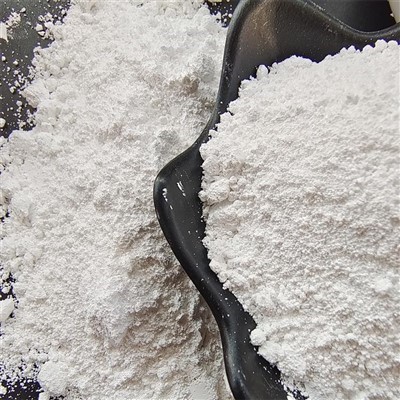
Let’s start by understanding what kaolin actually is. Kaolin is made up of really fine – grained clay minerals, mainly kaolinite. These minerals have this super unique structure. The kaolinite particles are like tiny little plates. They’re flat and have a smooth surface. When we talk about using kaolin to make products smoother, it all boils down to how these particles interact with other substances in a product.
In the world of coatings, kaolin is like a secret weapon for achieving that sleek, smooth finish. Think about paint, for example. When you want to paint your walls, you’re not just looking for a nice color; you also want it to go on smoothly without any bumps or rough patches. Kaolin helps with that. In paint formulations, the flat kaolinite particles can align themselves in a way that fills in all the little nooks and crannies on the surface it’s being applied to.
The paint industry has different types of paints, like water – based and oil – based. Kaolin works great in both. In water – based paints, it can act as a rheology modifier. That’s just a fancy way of saying it helps control the flow and thickness of the paint. When the paint has the right consistency, it spreads evenly, and that results in a smooth finish. It also helps prevent the paint from sagging on vertical surfaces. For oil – based paints, kaolin can enhance the gloss and levelling properties. It ensures that the paint dries with a uniform and smooth appearance, making your painted surface look like a million bucks.
Moving on to the paper industry, kaolin is a key ingredient. Paper manufacturers are constantly striving to make paper that feels soft and has a smooth surface. Kaolin is added to the paper pulp during the manufacturing process. The fine particles of kaolin fill the spaces between the paper fibers. This makes the paper surface much smoother. When you write on a piece of paper with kaolin in it, your pen glides easily, and there are no rough spots that could snag your pen tip.
Moreover, in the printing world, a smooth paper surface is crucial. If the paper is rough, the ink won’t spread evenly, and the printed image or text can look fuzzy. Kaolin – enhanced paper provides a perfect canvas for high – quality printing. The ink adheres well to the smooth surface, resulting in sharp, clear prints. Whether it’s a magazine, a brochure, or a book, kaolin – treated paper makes the printed materials look professional and visually appealing.
Now, let’s talk about the rubber and plastics industries. In rubber compounds, kaolin can significantly improve the surface smoothness. When rubber products are made, they need to have a consistent and smooth outer layer. Kaolin particles act as a kind of lubricant within the rubber matrix. They reduce the friction between the rubber molecules during processing. This means that when the rubber is molded into different shapes, like tires or seals, the final product has a smooth finish.
In plastics, kaolin is used as a filler. It not only reduces the cost of production but also enhances the smoothness of the plastic products. The kaolin particles disperse evenly throughout the plastic resin. They help in reducing the surface roughness of the plastic. For example, in plastic packaging, a smooth surface is important for both aesthetic and functional reasons. It looks better on the shelves, and it also makes it easier to stack and handle the packages.
Cosmetics are another area where kaolin shines. A lot of cosmetic products, like foundations, powders, and creams, aim to provide a smooth application on the skin. Kaolin’s fine particles can absorb excess oils on the skin’s surface, creating a matte and smooth finish. It also gives the cosmetics a silky texture. When you apply a kaolin – based foundation, it spreads easily and blends well with your skin, leaving you with a flawless and smooth complexion.
In toothpaste, kaolin plays an important role too. It helps in giving the toothpaste a smooth and creamy consistency. The fine particles of kaolin make the toothpaste easy to squeeze out of the tube and spread evenly on the toothbrush. And when you brush your teeth with it, the toothpaste glides smoothly over your teeth, ensuring a thorough cleaning.
But how exactly does kaolin achieve all these amazing things on a scientific level? Well, it all comes down to its surface chemistry and particle size. The flat kaolinite particles have a large surface area. This allows them to interact strongly with other substances in the product. For example, in a paint film, the kaolin particles can bond with the paint resins, creating a more cohesive and smooth structure.
The particle size of kaolin is also finely controlled during the processing. By having a consistent particle size distribution, it ensures that the kaolin can perform its function optimally. A narrow range of particle sizes means that the particles can pack together more efficiently, filling in small gaps and creating a smoother surface.
As a kaolin supplier, I know that the quality of kaolin matters a great deal. We source our kaolin from the best mines around the world. We then process it using advanced techniques to get the desired particle size and purity. Our kaolin products are rigorously tested to ensure that they meet the highest standards.
If you’re in the paints, papers, rubbers, plastics, cosmetics, or any other industry where smoothness is key, you really should consider using our kaolin. It can be a game – changer for your products. You’ll notice a significant improvement in the smoothness of your end – products, which can lead to higher customer satisfaction and better market competitiveness.
Whether you’re a small – scale manufacturer looking for that extra edge or a large – scale operation aiming to optimize your production, our kaolin can fit your needs. We’re flexible with our supply options and can work with you to find the best solution for your business.

If you’re interested in learning more about how our kaolin can improve the smoothness of your products or if you want to discuss a potential purchase, don’t hesitate to reach out. We’re always happy to have a chat and see how we can help you take your products to the next level.
Mica References
- Odent, M. (1989). The Role of Clay Minerals in the Paint Industry. Journal of Applied Clay Science.
- Wypych, G. (2019). Handbook of Fillers, 3rd Edition, ChemTec Publishing.
- Rosen, M. J. (2004). Surfactants and Interfacial Phenomena, 3rd Edition, Wiley – Interscience.
Lingshou County LM Mineral Products Co., Ltd.
As one of the most professional kaolin manufacturers and suppliers in China, we’re featured by quality products and good service. Please rest assured to buy customized kaolin made in China here from our factory. Contact us for more details.
Address: Dongzhuang Village, Nanyanchuan Township, Lingshou County, Shijiazhuang City, Hebei Province
E-mail: lmwtwz@163.com
WebSite: https://www.lmwtz.com/
