If you’ve ever wrestled with a heavy, awkward cleaning tool that leaves you huffing and puffing halfway through a small living room, you know maneuverability isn’t just a nice-to-have—it’s make-or-break for actually getting your floors clean. As a steam mop supplier who’s talked to hundreds of homeowners (and even a few rental property managers) about their cleaning headaches, I’m here to pull back the curtain on what steam mop maneuverability actually is, and why it’s way more than just how easily you can spin it around a coffee table leg. Steam Mop

First, let’s get one thing straight: maneuverability for cleaning tools isn’t just about how light something is, though that’s part of it. It’s the whole package of how a tool moves across different floor types, squeezes into tight spots, handles weight when you’re pushing or pulling, and doesn’t leave you with a sore wrist after 10 minutes. For steam mops, in particular, this gets extra specific because they’re not just pushing a pad—they’ve got a water tank, a heating element, and usually a handle that needs to balance all that stuff without feeling like you’re dragging a brick across your floors.
Let’s start with the basics: the shape and size of the mop head, because that’s your main point of contact with the floor. I’ve seen cheap steam mops with huge, boxy heads that are terrible for getting into corners or around baseboards, and then there are slimmer, T-shaped heads that are way more flexible. Wait, but it’s not just slimmer—its articulation matters too. A lot of mid-range to high-end steam mops these days have heads that swivel 180 degrees, or even 360 degrees? No, wait, most top ones do 180, but some lower ones only go 90. That tiny difference is huge. If your mop head only turns 90 degrees, you have to lift the whole thing up and reposition it every time you need to work around a chair leg or a toilet base. Swivel 180, and you can just nudge it sideways smoothly, no lifting, no stopping mid-clean. I’ll be real, when we test new models in our warehouse, that swivel is the first thing our team checks. Last month, we had a supplier send over a budget model that had a wonky swivel—you’d push it, and it would catch every time you turned, like it was stuck in molasses. We ended up passing on it, because we knew customers would get frustrated after 2 uses.
Next, weight distribution. This is where a lot of brands cut corners, especially with steam mops. Because you need a certain amount of weight to keep the mop head pressed against the floor so the steam actually works (if it’s too light, you’ll be pushing it and it will just glide over crumbs and dirt, leaving a streak), but you don’t want that weight all in the handle, making your wrist ache. A well-designed steam mop balances that weight between the head and the main body, usually with the water tank positioned low down, not perched up top like a backpack. I’ve lifted some steam mops that feel like carrying a gallon of milk (fine, manageable), and others that feel like a full 5-gallon water jug in the handle—after 5 minutes, my grip is slipping. The good ones, though, feel like a lightweight vacuum, which is a big win because most people already own a vacuum that’s a pain to lug around.
Then there’s how it handles different floor surfaces, which is a huge part of real-world maneuverability. A lot of people think steam mops are only for hardwood or tile, but if you’ve got laminate, vinyl, even low-pile carpet, you know that’s where the rubber meets the road (pun intended). For hard floors, you want a mop head that glides, not drags—cheap mops often have a rough plastic base that scratches vinyl or gets caught on tiny bumps like tile grout. We’ve found that mops with a thin, felt-like base on the mop head work way better, because they slide over grout lines and don’t leave marks. For low-pile carpet, some steam mops have a separate glide attachment that lifts the head a little higher so it doesn’t get stuck in the carpet fibers—if that attachment is easy to snap on and off, that adds to the maneuverability, too. No one wants to fumble with 10 different tools just to switch from mopping the bathroom tile to the hallway carpet.
Tight spots are where steam mop maneuverability either shines or dies, honestly. Let’s be honest, the messes we hate cleaning the most are the ones behind the toilet, under the kitchen sink, or between the refrigerator and the wall (that crumb graveyard, am I right?). A steam mop that’s too long, or has a handle that doesn’t bend, can’t reach those spots. That’s why so many of our top-selling models have an adjustable handle—either telescopic (so you can make it shorter for cleaning tight spaces, or taller for people who hate hunching over) or even a handle that folds down flat. Wait, folding flat is a game-changer for storing, but also for getting under low furniture like couches or beds. I’ve tested a few mops where even with the handle fully extended, I could slide the head under a couch that’s only 2 inches off the floor, no problem. The ones that don’t fold? You’re out of luck, and you’re stuck using a paper towel and a spray bottle, which is way more work.
Now, let’s talk about the not-so-obvious stuff: the cord or the tank size. Wait, how does a cord relate to maneuverability? Simple—if your steam mop has a 15-foot cord, you’re constantly unplugging and moving it if your living room is big. A 25-foot cord means way less stopping and starting, so you’re not tripping over the cord every two minutes. We hear that all the time from customers: “I hate stopping to move the cord.” Same with the water tank—if the tank only holds enough water for 100 square feet, you’re stopping to refill it mid-clean way more often, which kills your momentum. A tank that holds enough for 400-500 square feet means you can do a whole floor in one go, no interruptions. That’s part of maneuverability too, right? Being able to keep moving without hassle.
But here’s the thing—all of this only matters if the steam mop is actually effective, not just easy to move. I’ve seen super maneuverable mops that put out barely any steam, so they don’t clean anything. Or mops that put out tons of steam but are so heavy you can barely push them. The sweet spot is the balance: easy to move, balanced weight, good swivel, enough steam to do the job. When we source steam mops, our quality control team tests each model by having someone use it to clean a test floor with coffee stains, crumbs, and a tiny bit of grout, then rates how easy it is to maneuver through the process. We don’t just look at specs—we use them like normal people do.
I also want to call out a common myth: electric vs. cordless steam mops. A lot of people think cordless is automatically more maneuverable, because there’s no cord to worry about. But cordless steam mops usually have smaller water tanks, so you’re refilling them more, and they’re often heavier because of the battery. I’ve tested a cordless model that felt lighter, but died halfway through mopping my kitchen, and I had to wait an hour for it to charge. The corded model I was testing alongside? I finished the whole kitchen and dining room in one go, no refills, no waiting. So it’s not just “cordless = better” — it’s weighing what’s more important for your space. If you have a tiny apartment, a lightweight cordless might be perfect. If you have a big house with tile floors, a corded one with a long cord is way more maneuverable in the long run.
Another thing that people don’t talk about much: the handle grip. If the grip is slippery, or too thin, or designed for a person with big hands, that makes even a light mop feel hard to maneuver. A good grip is rubberized, has a little texture, and fits most hand sizes. I’ve had steam mop handles that feel like plastic pipes—you’re gripping so hard you get blisters after 10 minutes. The ones with soft, ergonomic grips? You don’t even notice you’re holding them, and that makes moving the mop around way easier. Small detail, huge difference.
Now, let’s get real about what customers actually experience. Last quarter, we did a survey of people who bought our steam mops, and the top comment (besides “it cuts through grease”) was how easy it was to get around furniture. One woman said she has a lot of small tables in her open-concept living room, and her old steam mop made her feel like she was playing a game of obstacles—she’d have to lift it over every table leg. Our model, with the 180 swivel, let her slide right between tables without stopping. Another guy mentioned getting under his bed, which he’d never been able to clean before because his old mop was too tall. He said the folding handle was a game-changer, and he now cleans under his bed once a week. That’s the stuff that matters—maneuability isn’t a spec on a box, it’s actually letting you clean the spots you’ve been avoiding.
As a supplier, we get it—you don’t want to sell something that’s a hassle to use, because that leads to bad reviews and returns. So when we pick which steam mops to work with, we don’t just check how light it is or how big the tank is. We actually use them in real homes, for real messes, to test how they move. We’ve had to pass on a few models that looked good on paper but felt clunky when you actually used them—like one that had a great swivel but the handle was so short you had to hunch over the whole time, which killed your ability to move smoothly. Or another that had a big tank but the mop head was so big it couldn’t fit through a standard doorway.
If you’re looking for a steam mop, don’t just stare at the specs (though tank size and swivel range are good things to check). Think about your space: how big is it? What kind of floors do you have? How many tight spots do you have? If you have a small apartment with hardwood, a lightweight cordless with good swivel is great. If you have a big home with tile and vinyl, look for a corded model with a long cord and a low water tank position. And if you have a lot of low furniture, make sure it has a foldable or adjustable handle.
At the end of the day, maneuverability for a steam mop is all about making cleaning less of a chore. It’s the difference between looking forward to mopping because it’s easy, and dreading it because you know you’ll be fighting the tool the whole time. We’ve built our business around finding steam mops that do that, so our customers can get their floors clean without the hassle.
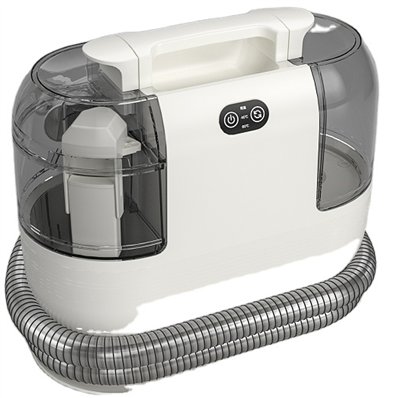
Carpet and Upholstery Cleaner Machine If you’re a retailer, or a distributor, looking to stock steam mops that actually perform when it comes to maneuverability and function, we’d love to connect to talk about our product line and how we can partner to meet your needs. We source, test, and supply only models that we’d be happy to use in our own homes, so you can trust that our products deliver on what they promise.
References
- American Cleaning Institute. (2022). "Selecting and Using Steam Mops for Household Floor Care." ACI Guidelines for Hard Surface Cleaning.
- Consumer Reports. (2023). "Steam Mop Test: What to Look For in Maneuverability and Performance." Consumer Reports Home Appliance Reviews.
- Nielsen. (2022). "Home Cleaning Tool Usage Trends: Maneuverability as a Key Purchase Driver for Floor Care Products." Nielsen Retail Industry Report.
- International Association of Home Sanitation Professionals. (2021). "Best Practices for Steam Mop Design and Testing." IAHSP Cleaning Equipment Standards.
Ningbo MLE Electrical Appliance Co., Ltd.
Ningbo MLE Electrical Appliance Co., Ltd. is one of the most reliable steam mop manufacturers and suppliers in China, also supports customized service. Welcome to buy advanced steam mop made in China here and get pricelist from our factory. Quality products and reasonable price are available.
Address: 921 Room, Jinsejiangnan Building, Zhonghe Street, Yinzhou District, Ningbo, Zhejiang, China.
E-mail: Eileen@nbmle.cn
WebSite: https://www.cleaningappliance.com/
