When I first started selling gas torches for plumbing applications, I can’t tell you how many times a contractor or DIY enthusiast would stop by my shop, or shoot me a message over the phone, and ask that exact question: “Can a gas torch be used for soldering copper pipes?” At first, I’d give a quick, straightforward “yes,” but after watching a few people try to hack a cheap household torch through a job and leave with leaky joints, I realized that answer was missing a lot of important context. Today, I want to break this down not just as a supplier who’s seen hundreds of torches in action, but as someone who’s talked to enough plumbers to know the difference between a job done right and one that’ll come back to bite you a year down the line. Gas Torch
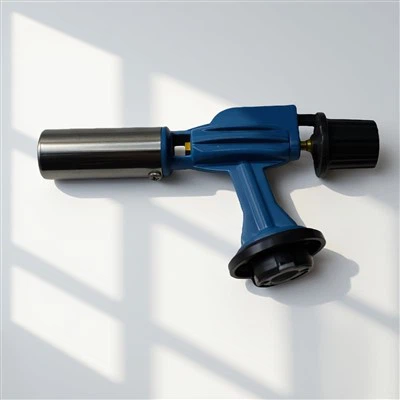
First, let’s get one basic definition out of the way because a lot of people mix up soldering and brazing, and that confusion is at the root of a lot of bad calls. Soldering is the process of joining two metals with a filler metal that melts at below 840 degrees Fahrenheit (or 450 degrees Celsius) — for copper pipes, that filler is almost always lead-free solder these days, thanks to modern regulations. Brazing uses a higher-melting filler, and while it’s used for some heavy-duty piping jobs, it’s not what plumbers reach for when they’re connecting supply lines under sinks or running hot and cold lines to a water heater.
So if soldering works at temperatures under 840 degrees, why would a gas torch — which can get way hotter than that — ever be a problem? The answer is all about control. Not every gas torch is built for precision heating, and not every copper pipe soldering job needs the same level of heat. Let’s start with the torches that work best for this task, because that’s where my expertise as a supplier comes in. When I stock torches, I don’t just pick the cheapest one on the market. I look for models that put out a consistent, adjustable flame — that’s non-negotiable. A torch that spits out an all-or-nothing blue flame so hot it makes the copper glow red is too often the one that overheats the pipe, burns the solder too fast, or even softens the pipe if it’s thin gauge, like the 15mm copper used in residential supply lines.
A lot of DIYers make the mistake of grabbing a small MAPP gas torch for this job, thinking more heat means faster work. MAPP gas torches do get hot — upwards of 3,700 degrees Fahrenheit — and they work great for tasks like thawing frozen pipes or bending metal, but for soldering 15mm or 22mm copper pipe, that’s overkill. You end up wasting solder, burning through flux (the stuff that cleans the metal so solder sticks), and in some cases, warping the pipe. I tell first-time users that a propane torch with an adjustable head is their sweet spot for most residential and light commercial jobs. Propane burns at around 3,600 degrees, but when you dial the flame down to a sharp, narrow blue cone (no yellow, that’s incomplete combustion and useless heat), you get exactly the targeted heat you need.
Wait, but what about larger jobs? If you’re running a 28mm copper line for a boiler or a commercial building, you might need a bit more oomph, and that’s where a hybrid propane-MAPP torch comes in. These models let you switch between fuels, so you can keep the flame narrow when you’re working on small joints, and crank it just enough to heat a larger pipe evenly. I’ve had professional plumbers tell me they keep one of these in their truck for exactly that reason — no need to carry two separate torches for different jobs.
Now, let’s talk about the myth that gas torches are too dangerous for soldering copper pipes. I won’t lie to you — any open flame has risks, but that’s not a flaw in the torch itself, it’s a flaw in how you use it. I’ve seen guys use a small electric soldering iron (which is another tool people ask about) and burn down a garage because they left it too close to insulation. A gas torch, if used correctly, is just as safe as any other plumbing tool when you follow basic rules. The biggest safety tip I always share: never point the flame at yourself or other people, keep a fire extinguisher nearby, and never leave a lit torch unattended. For new users, the key is practice. Grab a scrap piece of copper pipe and a fitting, mess around with the flame settings until you get the hang of how long it takes for the metal to warm up. I always tell people: you don’t want to heat the pipe until it’s glowing red. You want it hot enough that when you touch the solder to the joint, the solder melts instantly and flows all the way around the gap between the pipe and the fitting. If you have to drag the solder, your pipe isn’t hot enough, or you’re using too small a torch.
Another common mistake I see is people skipping flux, or using the wrong kind of flux, and then blaming the gas torch. Flux is non-negotiable here. It removes oxidation from the copper and the fitting, so the solder can bond properly. There’s flux specifically for soldering copper pipe — make sure you’re using that, not general-purpose flux. And when you apply it, use a small brush to coat the outside of the pipe end and the inside of the fitting, then wipe off any excess before you push them together. If your joint leaks a few months later, it’s way more likely to be because of bad flux application than a bad gas torch.
Now, let’s get into what makes a torch good for this specific job, because not all gas torches are created equal. When a plumber comes to my shop asking for a torch to solder copper, the first thing I ask is: what size pipes are you working on, and do you need portability? For DIYers doing a single repair under a sink, a small, lightweight propane torch with a disposable fuel canister is perfect. It’s cheap, easy to carry, and the flame is easy to adjust. For professionals who are running pipe all day, a torch with a refillable fuel tank is way more cost-effective — you don’t have to buy new canisters every hour, and they put out a more consistent flame than disposable models. I’ve also started stocking torches with piezo ignition, which means you don’t need a lighter or matches to light them — that’s a small detail, but it saves time on jobs where your hands are covered in flux or water.
Wait, but what about the old advice that you should use a blowtorch (which is just another name for a gas torch, let’s be real) for soldering copper? Yeah, that’s been around for decades, and it’s true — as long as it’s the right blowtorch. The key difference between a blowtorch that works and one that doesn’t is the flame control. A cheap torch that puts out a huge, wobbly yellow flame is not a blowtorch that works for soldering. It’s a torch that’ll waste fuel and heat up the entire pipe instead of just the joint. A good gas torch for this job has a directional flame that lets you focus the heat exactly where you need it. I always demo this for customers at my shop: hold a scrap copper pipe next to my cheap entry-level torch and my premium adjustable torch. The cheap one heats the whole pipe in 10 seconds, while the good one heats just the joint in that same time. That’s the difference between a perfect solder joint and a leaky one.
I also get asked a lot about alternative heat sources, and whether a gas torch is better than electric soldering irons or induction heaters. Let’s be honest: induction heaters are great, but they’re bulky, expensive, and you can’t use them if there’s no power nearby. Electric soldering irons only work on very small pipes, like 10mm, and they take forever to heat up. A gas torch is portable, fast, and works just about anywhere, which is why plumbers have relied on them for generations. The common misconception is that gas torches are only for big jobs, but as a supplier, I can tell you that most soldering done on copper pipes these days is still done with a gas torch — it’s just a matter of choosing the right one for the job.
Let’s talk about a real-world example that sticks with me. A few months ago, a new DIYer came to my shop panicking because his first soldering job for a bathroom remodel was leaking. He’d grabbed a $20 MAPP gas torch from the hardware store, no adjustable settings, and tried to solder two 15mm pipes. He’d heated the pipe so much that the solder just beaded up instead of flowing, and half the joint wasn’t sealed. I gave him a small adjustable propane torch, a tube of lead-free flux, and walked him through the process step by step. He went home, redid the joint, and sent me a picture a week later of the finished bathroom, no leaks. That’s the difference between a bad choice of torch and a good one.
Another thing to consider is fuel type, which ties back to both performance and cost. Disposable propane canisters are cheap, but if you’re working on multiple jobs a week, you’ll go through a lot of them. Refillable propane tanks are cheaper in the long run, and they fit most adjustable torch heads. MAPP gas is hotter, so it works faster on larger pipes, but it’s more expensive than propane, and for most residential jobs, you don’t need that extra heat. I usually recommend propane for 90% of copper soldering jobs, and only suggest MAPP or hybrid fuel if you’re working on pipes larger than 28mm.
Now, let’s clear up a common safety concern that I hear all the time: carbon monoxide. When you burn gas in a confined space, you have to make sure there’s ventilation, right? That’s true for any open flame, including a gas torch. I always tell people never to solder copper in a closet, a closed cabinet, or a small bathroom with no window open. Carbon monoxide is odorless, and even a small buildup can make you sick. As long as you have a way for fumes to escape, a gas torch is safe to use indoors, which is exactly where most copper pipe soldering happens. If you’re working in an extra-tight space, some of the newer torches have sealed combustion chambers that reduce fumes, but even then, ventilation is non-negotiable.
So to circle back to the original question: yes, a gas torch can absolutely be used for soldering copper pipes. But it’s not a one-size-fits-all answer. The success of the job depends on three things: the type of gas torch you choose, how you adjust the flame, and how you apply the solder and flux. As someone who supplies these torches, I’ve seen jobs done with $10 disposable torches that work perfectly, and jobs done with $100 professional torches that go wrong because the user didn’t know how to use them. The takeaway isn’t that gas torches are good or bad — it’s that you need to pick the right tool for your job, and learn how to use it properly.
If you’re a DIYer tackling a small repair, don’t overspend on a big MAPP gas torch. Get an adjustable propane torch, a tube of lead-free flux, a roll of lead-free solder, and a small wire brush to clean the pipe and fitting. Practice on scrap pieces first, and remember: heat the metal, not the solder. When you hold the solder to the joint, the metal should melt the solder instantly. If it doesn’t, wait a few more seconds for the pipe to warm up, don’t keep applying more heat for too long or you’ll burn the flux and ruin the joint.
If you’re a professional plumber or a contractor, invest in a refillable torch with an adjustable head. It’ll save you money on fuel over time, and the consistent flame will make your jobs faster and more reliable. Look for models that are lightweight enough to carry around all day, and have features like piezo ignition to save time.
At the end of the day, a gas torch is one of the most versatile and reliable tools for soldering copper pipes. The myth that it’s too hot or too dangerous comes from bad tools and bad technique, not the tool itself. If you take the time to choose the right torch for your job, follow basic safety rules, and practice a little, you’ll get clean, leak-free joints every time.

If you’re looking for the right gas torch for your soldering needs, we have a range of options for DIYers and professionals alike, from entry-level adjustable propane torches to heavy-duty hybrid models for large commercial jobs. We also carry all the supplies you need for copper soldering, including lead-free flux and solder, and our team is always available to help you pick the right tool for your specific project. Don’t hesitate to get in touch to discuss your requirements and find the perfect gas torch for your work.
Propane Gas Torch References
- International Association of Plumbing and Mechanical Officials (IAPMO). (2020). Uniform Plumbing Code: Soldering and Brazing Requirements for Copper Pipe.
- American Welding Society (AWS). (2019). Guide to Flame Soldering of Copper Plumbing Tubing.
- U.S. Consumer Product Safety Commission (CPSC). (2021). Safety Guidelines for Using Open-Flame Tools in Residential and Commercial Plumbing Applications.
- Plumber Magazine. (2022). "Torch Selection for Copper Pipe Soldering: What Pros Actually Use."
Yuhuan Shunshida Intelligent Electromechanical Co., Ltd.
As one of the most professional spray gun manufacturers and suppliers in China, we’re featured by quality products and good service. Please rest assured to buy durable spray gun at low price from our factory. We also accept customized orders.
Address: No. 186 East Nanxing Road, Chumen Town, Yuhuan City, Zhejiang Province
E-mail: yuhuanshunshida@gmail.com
WebSite: https://www.cmssdgastorch.com/
